When is an implant contraindicated?
An implant is only a contraindication for tap water iontophoresis if it lies directly in the path of the current between the electrodes.
Metal implants are generally a contraindication for all types of electrotherapy. While an implant does not affect the sweat-reducing effect of tap water iontophoresis, we cannot predict with certainty how the current will affect the implant or the surrounding tissue.
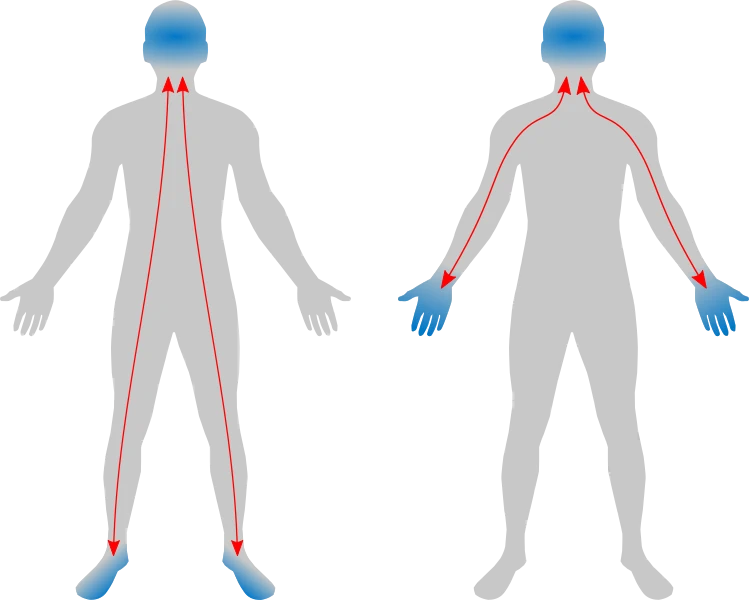
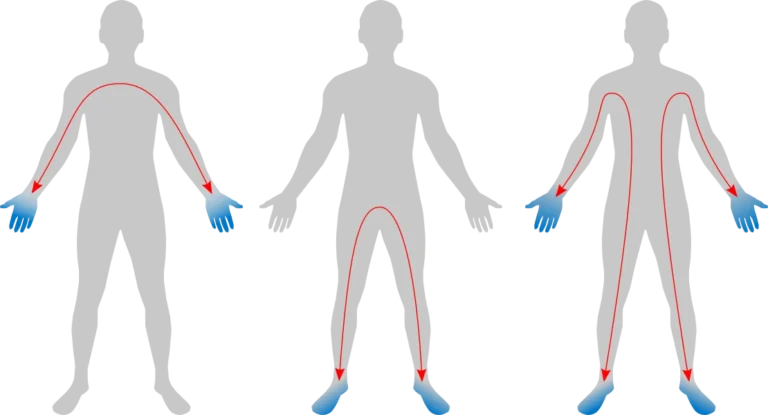
The decisive factor is whether the implant lies directly in the path of the current. The current always takes the shortest path from one electrode to the other. Therefore, imagine how this path would run in your specific case. Only if an implant is located exactly along this path is the treatment not permitted.
Important to know:
Implants also include fixed braces that cannot be removed. Copper IUDs for contraception are also considered implants—however, plastic hormonal IUDs are not.
Possible exception:
Only the doctor who inserted the implant and knows the exact material can assess on a case-by-case basis whether an exception is possible.
Treatment of the hands and feet
Critical implants if located in the path of the current: in the hands, arms, shoulders, neck or chest, hips, knees, feet. Implants in the head, throat and neck are always non-critical.
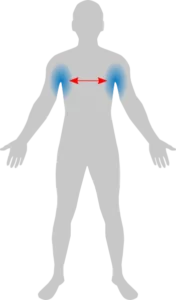
Treatment of the armpits
Critical implants in the shoulders, neck and chest. Non-critical implants in any case in the hands, forearms, head, abdomen, pelvis, knees and feet.
Treatment of the face (hands or feet as the counter-electrode)
Implants are always a concern in the face, mouth, neck and throat. Depending on the current path, implants in the hands, arms, abdomen, pelvis, knees and feet may also be a concern.