Practical use
Electrodes for different parts of the body
With the appropriate electrodes, many parts of the body can be treated. It is essential that the electrode allows for a uniform flow of current into the skin. Furthermore, there must be a ‘water cushion’ between the electrode and the skin’s surface to conduct the electrical current and act as a pH buffer.
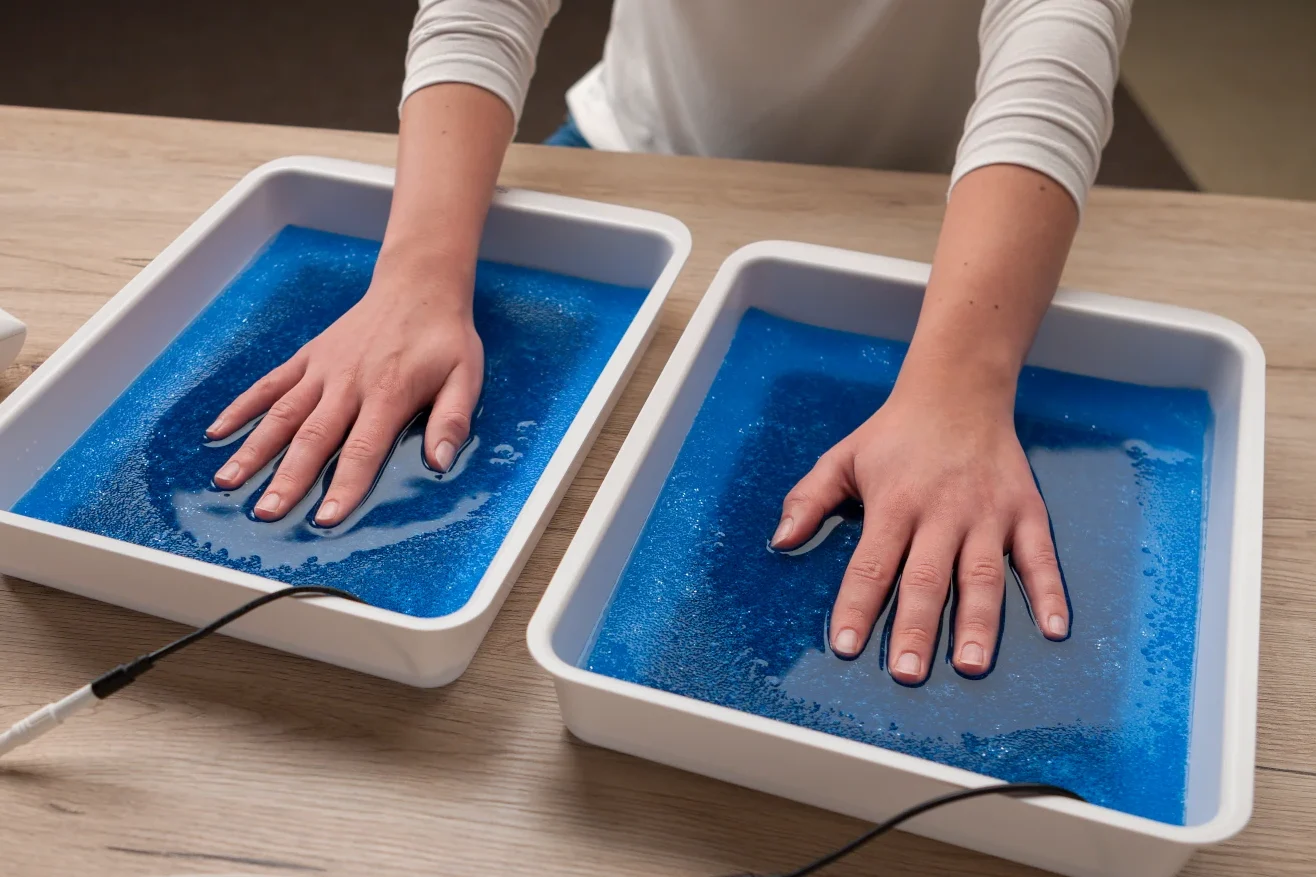
Treatment of the hands and feet takes place in tubs, at the bottom of which flat electrodes are placed. The electrodes are covered with foam inserts or grids, which also serve as spacers (water cushion). Finally, the tubs are filled with normal tap water. The water level is set so that only the palms of the hands and the soles of the feet are in contact with the water. The sweat-reducing effect is limited to the areas of skin in contact with the water.
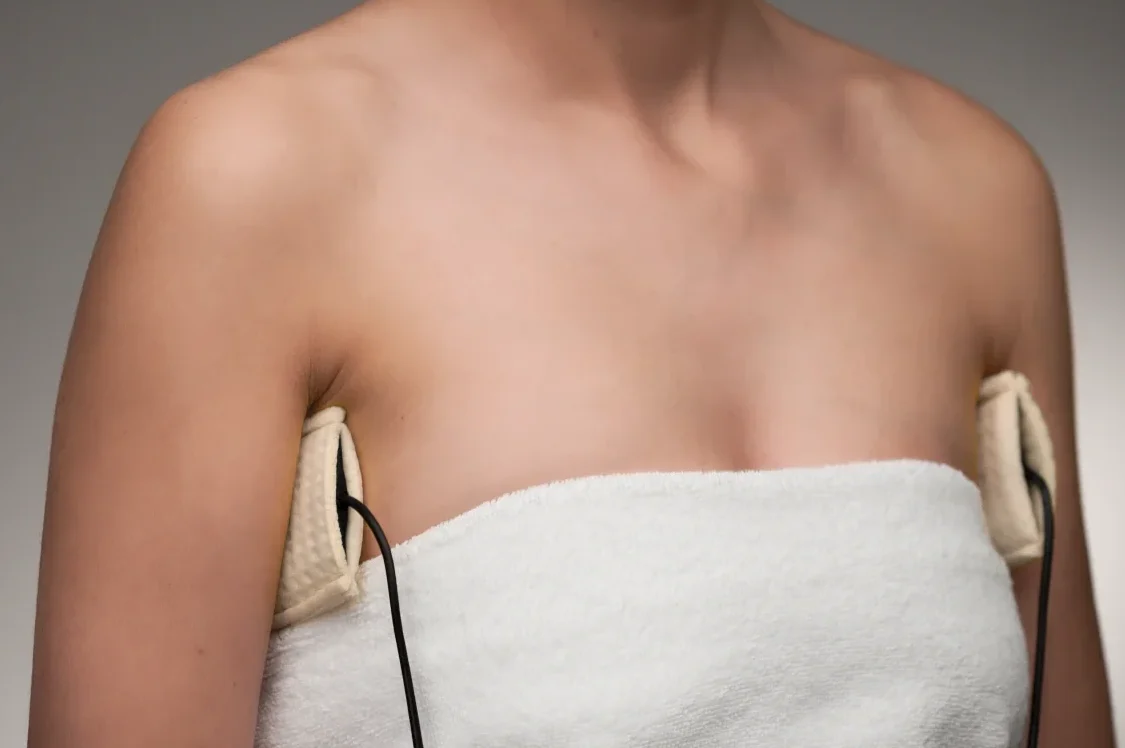
Other parts of the body, such as the armpits or the face, require textile electrodes, which can be placed freely on the body and mould to its contours. Instead of a water bath, wet sponge pads form the necessary ‘water cushion’ between the electrodes and the skin. Under the armpits, for example, small electrodes are clamped in place after first being inserted into wet sponge pouches. Other parts of the body, such as the face, require larger and, in some cases, anatomically pre-shaped electrodes or sponge pads.
Current strength and direction
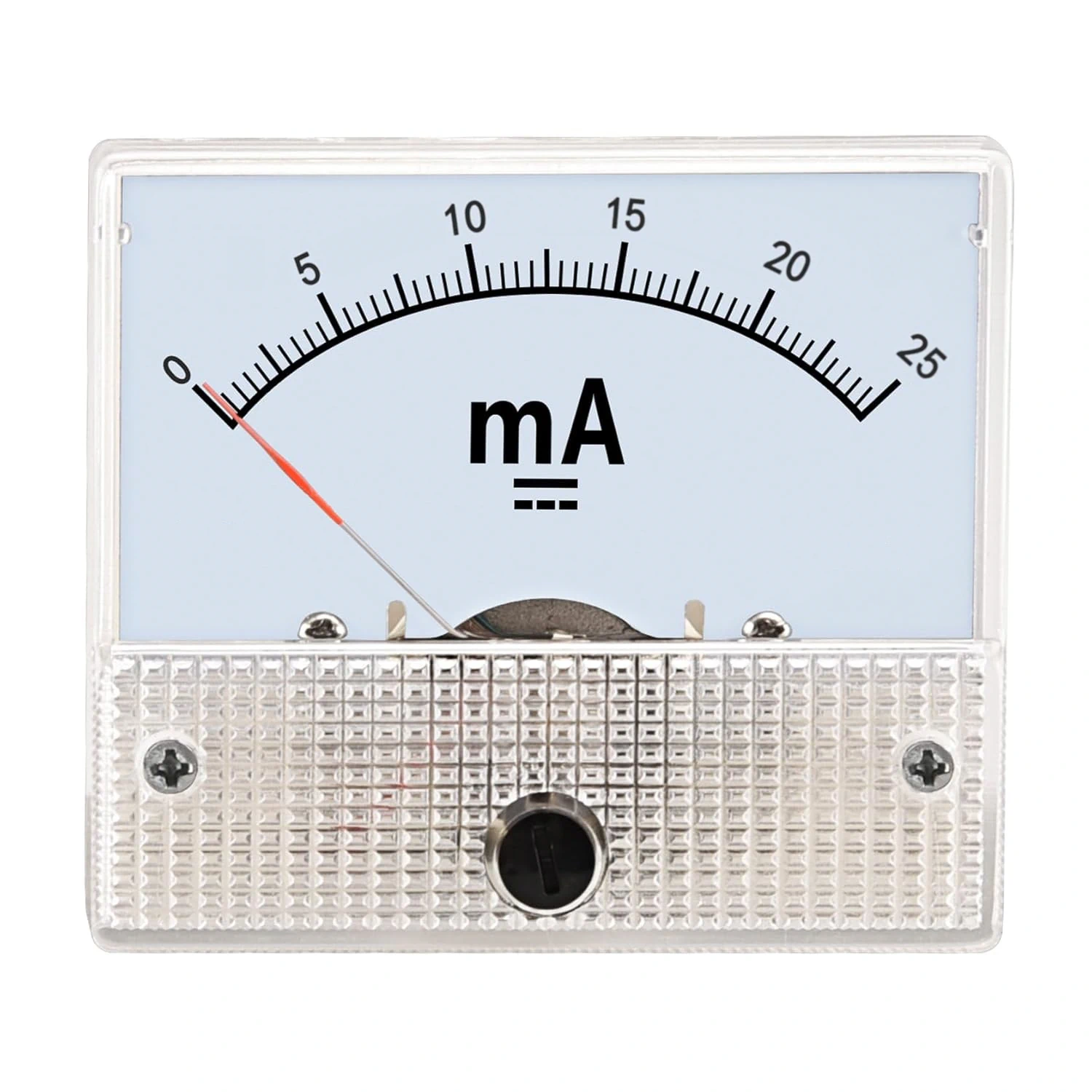
The sweat-reducing effect depends on the selected current level and the duration of treatment. The current level is set so that the current is felt as a slight tingling sensation without causing pain. This tolerance threshold varies not only from user to user, but also between different electrodes. With larger electrodes, the current is distributed over a larger area and is perceived as less intense. As a result, higher currents are tolerated in this case. With smaller electrodes, for example for the underarms, only lower currents are tolerated. Finally, over the course of the treatments, the body also becomes accustomed to the current.
To achieve a sweat-reducing effect, it is not necessary to reach specific current levels depending on the body part or electrode size.
The sensation of the current, as well as its effect, depends to a certain extent on the current direction. The current direction is therefore regularly reversed to achieve uniform sweat reduction on both sides of the body.
Direct current and pulsed current
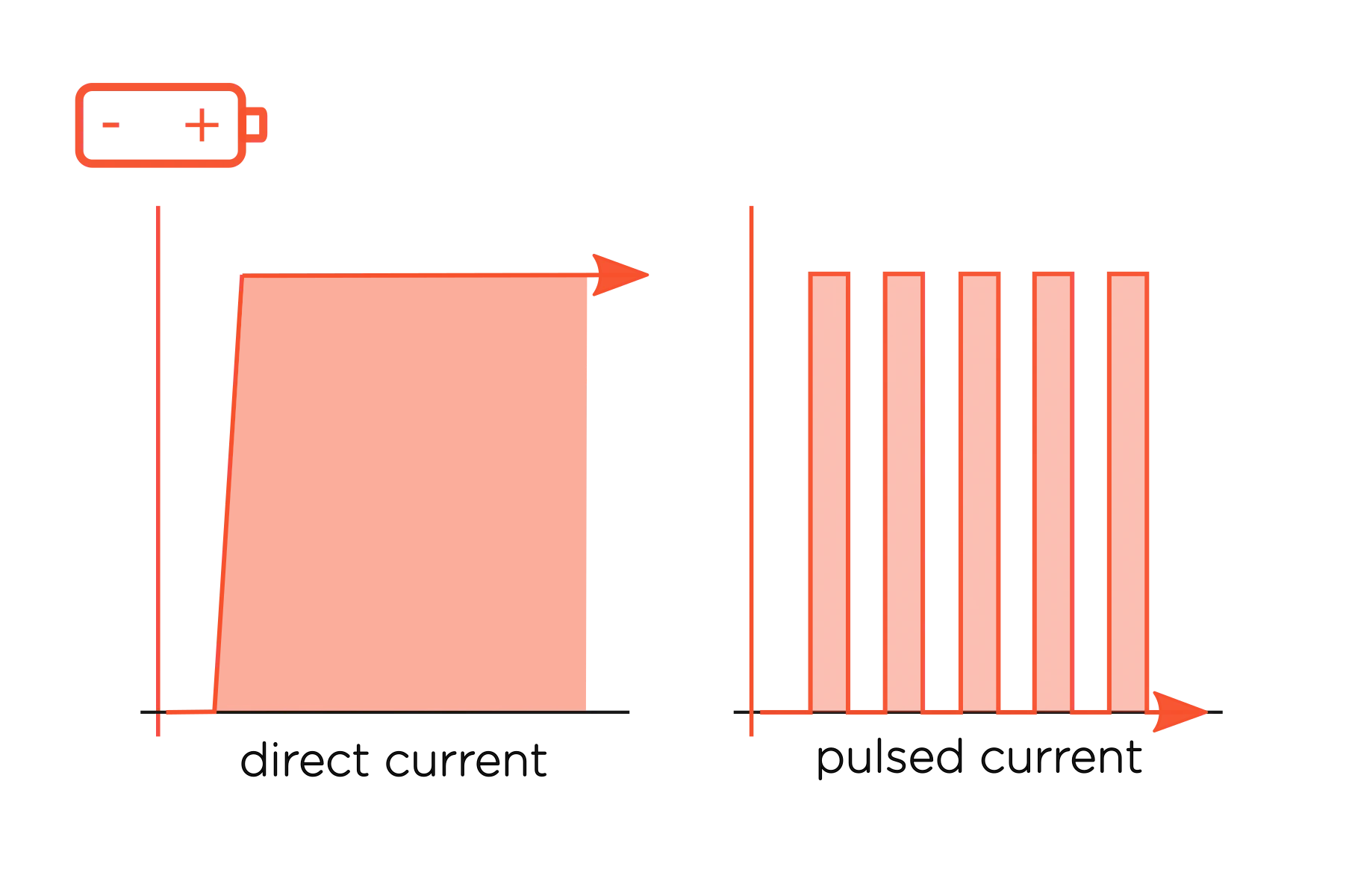
The current is applied as direct current or as pulsed current (pulsed direct current). Both forms of current differ in terms of therapeutic efficacy and the sensation of the current. Direct current is considered more effective and leads to faster therapeutic results. In cases of pronounced sweating, direct current is the only option.
Pulsed current is perceived as less intense, allowing higher current levels to be tolerated. However, due to the pulsed nature of the current, the therapeutic dose cannot be directly compared with that of direct current. Pulsed current is used more frequently for particularly sensitive individuals, such as children, as well as during the so-called maintenance phase (see below).
In principle, both forms of current have their merits. Many users employ both operating modes depending on the limb and the phase of therapy. Furthermore, the sensation of the current varies from patient to patient. For the therapy, the current must in any case only be increased to the point where a slight tingling sensation is felt.
Duration and frequency of treatment
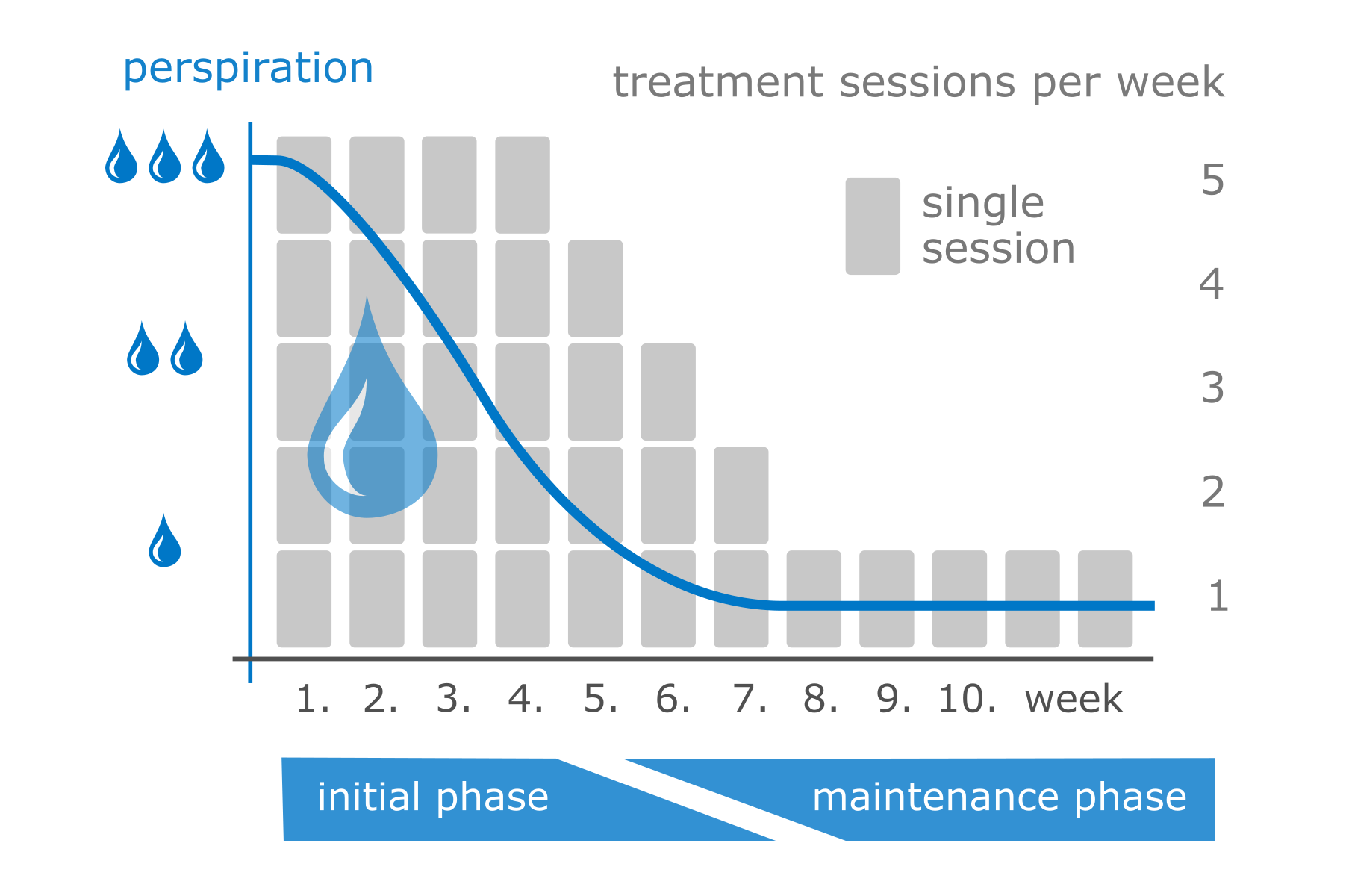
During the so-called initial phase, sweating is reduced as much as possible through frequent and regular treatments. Over a period of 4 to 6 weeks, this requires 4 to 5 sessions per week. With consistent use, the first visible reduction in sweating often becomes apparent after just one week.
The sweat-reducing effect of tap water iontophoresis is reversible. Therefore, the initial phase is followed by a so-called maintenance phase, during which 1 to 2 sessions per week must be carried out on a long-term basis. During the transition from the initial phase to the maintenance phase, the frequency of treatment is gradually reduced.
Depending on the device’s power, a single therapy session lasts between 15 and a maximum of 30 minutes.