Hyperhidrosis
Primary and secondary hyperhidrosis
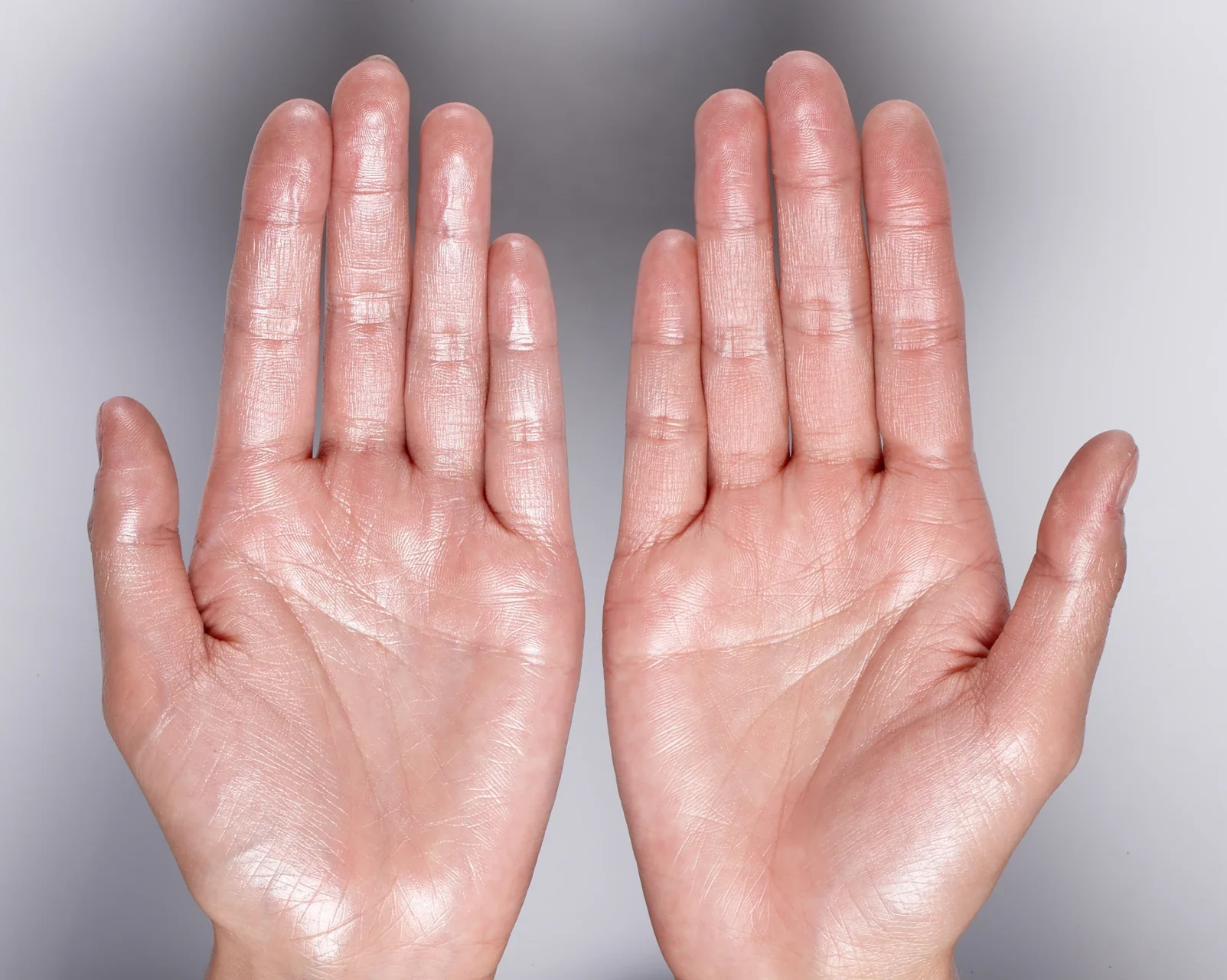
Sweating is healthy and a normal bodily reaction to changing situations. For example, people sweat in high temperatures, during physical exertion or when under stress. However, some people experience persistent, heavy sweating without any apparent trigger. This excessive sweating is not normal and is known as hyperhidrosis. The term originates from Greek and is composed of ‘hyper’ (too much) and ‘hidrosis’ (sweating).
For the correct treatment, it is important to distinguish between primary and secondary hyperhidrosis. Primary hyperhidrosis occurs without any apparent cause and is due to a dysregulation of the autonomic nervous system. The sweat glands themselves are not diseased. The autonomic nervous system autonomously controls vital bodily functions such as thermoregulation, circulation and respiration. Normally, various regulatory mechanisms keep each other in balance, thereby ensuring normal sweating behaviour appropriate to the situation. In hyperhidrosis, this balance is disrupted: the sympathetic part of the nervous system is overactive, and the signal processing from the brain via the nerves to the sweat glands is malfunctioning. The underlying malfunctions have not yet been conclusively clarified in detail.
In the case of secondary hyperhidrosis, however, excessive sweating is the result of another medical condition or a course of medical treatment. As the causes of the two forms differ, they also require different therapeutic approaches. To make a reliable diagnosis and initiate the appropriate treatment, a specialist should always be consulted in cases of excessive sweating that is perceived as distressing.
Prevalence, predisposition and age
According to various studies, approximately 3 to 6% of the population are affected by primary hyperhidrosis. In terms of severity, the sweating in these cases is barely tolerable or intolerable and frequently, or even always, interferes with daily life. The prevalence of sweating is largely independent of gender. The armpits are most commonly affected, followed by the hands, feet and face.
Primary hyperhidrosis is not an acquired condition, but is due to a personal predisposition. In about half of those affected, this predisposition is genetic, meaning that excessive sweating runs in the family.
Excessive sweating usually only begins at a certain age. In many cases, it occurs at an early stage, i.e. in childhood, adolescence or young adulthood. Hyperhidrosis generally affects sufferers for life, but may diminish with age.
Affected parts of the body
If excessive sweating occurs only in specific areas of the body, this is referred to as focal hyperhidrosis. In such cases, sweating is usually bilateral and often affects several areas of the body at the same time.
Areas with a high concentration of eccrine sweat glands are particularly commonly affected, especially the armpits, palms and soles of the feet. Less commonly, excessive sweating occurs on the face, neck, parts of the torso, and the buttocks and genital area. Sweating usually manifests in different areas at specific stages of life: hands and feet as early as childhood, armpits in adolescence, and other parts of the body only later in adulthood.
Secondary hyperhidrosis more commonly affects the entire skin (generalised hyperhidrosis) and tends to occur in later life. Nocturnal and asymmetrical sweating are also indicators of secondary hyperhidrosis.
Impact on daily life and health
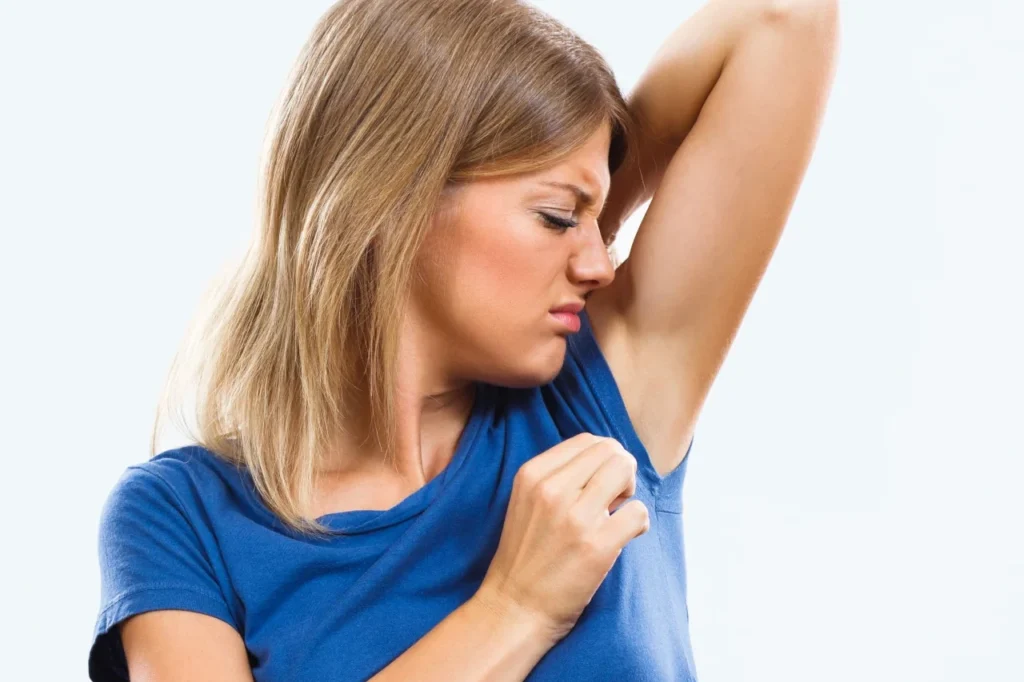
Sweating is a natural and necessary bodily process. It usually occurs for a limited period and is triggered by clear causes. Damp skin, soaked clothing or the smell of sweat can usually be managed effectively, so that social interactions are hardly affected by them.
However, this is not the case for people with hyperhidrosis. Hyperhidrosis is a constant companion in everyday life and leads to a significant impairment of quality of life in both professional and private spheres. It is often assumed that excessive sweating is not a ‘real condition’. Others react with a lack of understanding and avoid physical contact. This leads to feelings of embarrassment, anxiety and additional stress in those affected, which in turn can exacerbate the sweating. In extreme cases, this strain can result in social exclusion and isolation.
Another common consequence of hyperhidrosis is associated skin conditions. The constantly damp skin environment causes the skin to soften and promotes fungal, bacterial and viral infections.
Treatment options
To date, there is no treatment that can eliminate hyperhidrosis at its root cause, permanently and without side effects or risks. However, a wide range of treatment options are now available that can significantly reduce excessive sweating. These differ in terms of their effectiveness, invasiveness, potential side effects, applicability to different parts of the body, as well as availability and cost.
The treatments can be categorised within a so-called treatment cascade: as effectiveness increases, side effects and risks generally rise as well. The aim is therefore to work with the treating doctor to find a treatment in which the benefits, risks and application are in a balance that is acceptable to the individual. It is often necessary to try several methods to determine the optimal treatment.
In addition to home remedies, the following medical treatment options are available:
- Antiperspirants
Antiperspirants contain aluminium chloride, which temporarily blocks the sweat glands. They must be applied to the skin regularly. The concentration of aluminium chloride ranges from around 1–2% in low-dose preparations to 25% in high-dose preparations. Whilst effectiveness increases with higher concentrations, the risk of skin irritation also rises. - Topical anticholinergics
Anticholinergics are medicines that inhibit signal transmission to the sweat glands. In topical form, they are applied regularly to the skin, where they are absorbed. As accidental contact with other areas of the skin can quickly lead to side effects, they are usually applied using special wipes or dispenser systems. The use of topical anticholinergics is restricted to specific areas of the body (e.g. underarms) and age groups. - Tap water iontophoresis
In tap water iontophoresis, a weak direct current is passed through the affected areas of skin. The current flows through tap water: hands and feet are treated in water baths, whilst electrodes with damp sponge cloths are used for the armpits or other parts of the body. The effect is reversible, which is why the treatment must be carried out continuously and regularly. - Botulinum toxin
Botulinum toxin blocks the nerve impulses to the sweat glands. After injection into the affected skin areas, the effect sets in quickly and usually lasts for around six months. After this, further treatment is required. This therapy is also associated with risks and side effects and is primarily used in the underarm area. - Anticholinergic medication
Available in tablet or drop form, anticholinergic drugs act systemically throughout the body and are particularly suitable when multiple areas of the body are affected. However, as they influence not only sweat production but also other bodily functions, increasing doses often lead to a variety of physical and psychological side effects. - Removal of sweat glands
The removal of sweat glands is a permanent and irreversible treatment option. To achieve satisfactory results, several procedures may be necessary in some cases. Various methods are used, including surgical suction, laser treatments or thermal procedures. These procedures are associated with risks and side effects and are performed exclusively in the underarm area. - Sympathectomy
In sympathectomy, the nerve pathways between the brain and the affected areas of the body are irreversibly severed or blocked. The procedure is performed near the spine at the level of the thoracic or lumbar spine. The effect is immediate; however, in approximately 90% of cases, so-called compensatory sweating occurs in other parts of the body. Due to the significant risks involved, sympathectomy is considered a last resort (ultima ratio).