Tap water iontophoresis
Background
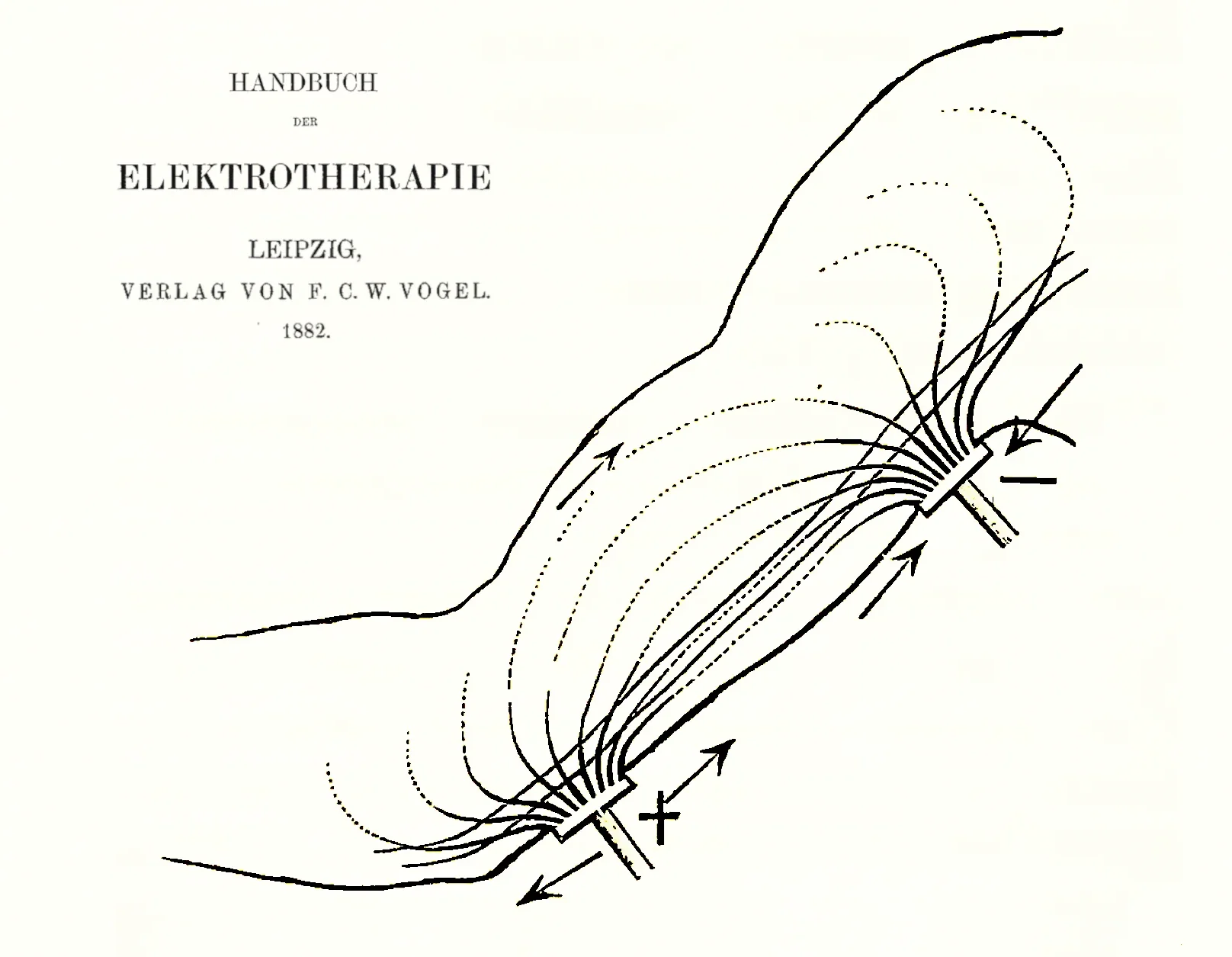
As early as the late 19th century, direct current was being used with appropriate body electrodes for various therapeutic purposes. The antiperspirant effect of iontophoresis using tap water was first described in the 1940s. However, a practical device did not become available until the late 1960s. In the 1990s, the first commercial devices came onto the market, initially used only in clinics and doctors’ surgeries.
Technical advances later made home use possible. As the treatment must be carried out regularly and continuously, home therapy represents a great convenience for users. This has contributed significantly to the worldwide spread and acceptance of tap water iontophoresis.
Principle and application
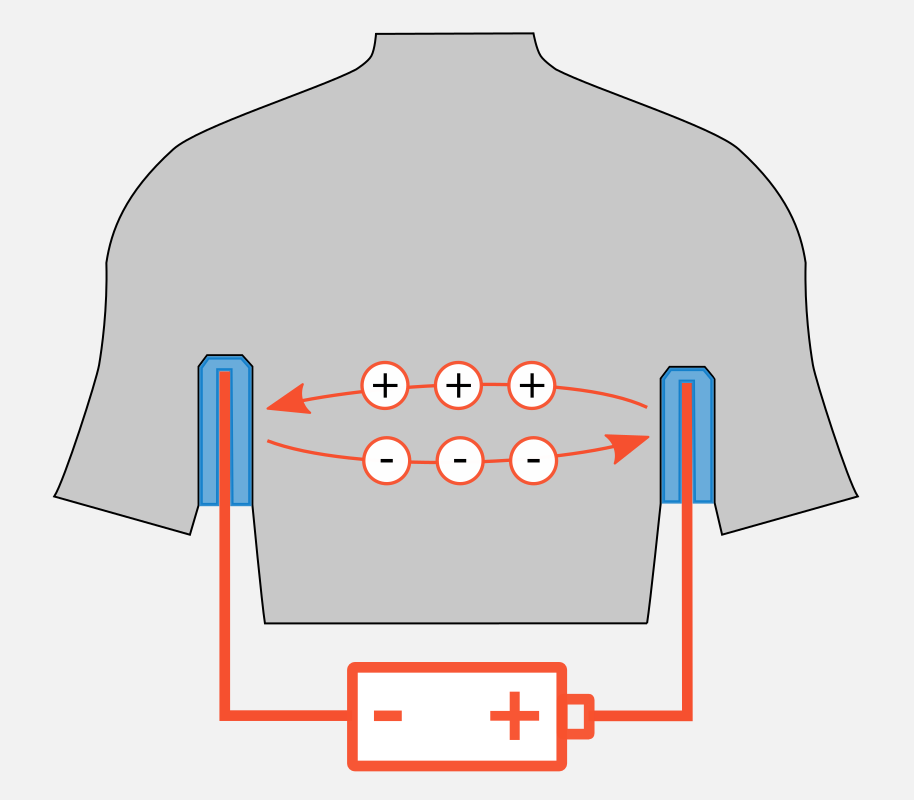
Tap water iontophoresis requires a direct current source, two electrodes and ordinary tap water. Two limbs are connected to the power source and the electrodes respectively, so that a flow of current or ions can take place across the affected areas of skin and body. The positively charged ions dissolved in the water and in the body migrate towards the cathode, whilst the negatively charged ions migrate towards the anode.
The tap water serves as an electrically conductive medium between the electrodes and the skin. This prevents direct skin contact with the electrodes and ensures the most uniform flow of current through the skin. The water also serves as a pH buffer, as pH shifts occur at the electrode surfaces which, without a buffering medium, could lead to chemical burns on the skin.
The hands and feet are treated in pairs in two basins filled with tap water. Other parts of the body, such as the armpits or the face, are also treated in pairs using two electrodes, which are covered by sponge cloths previously soaked in tap water.
Therapeutic effect
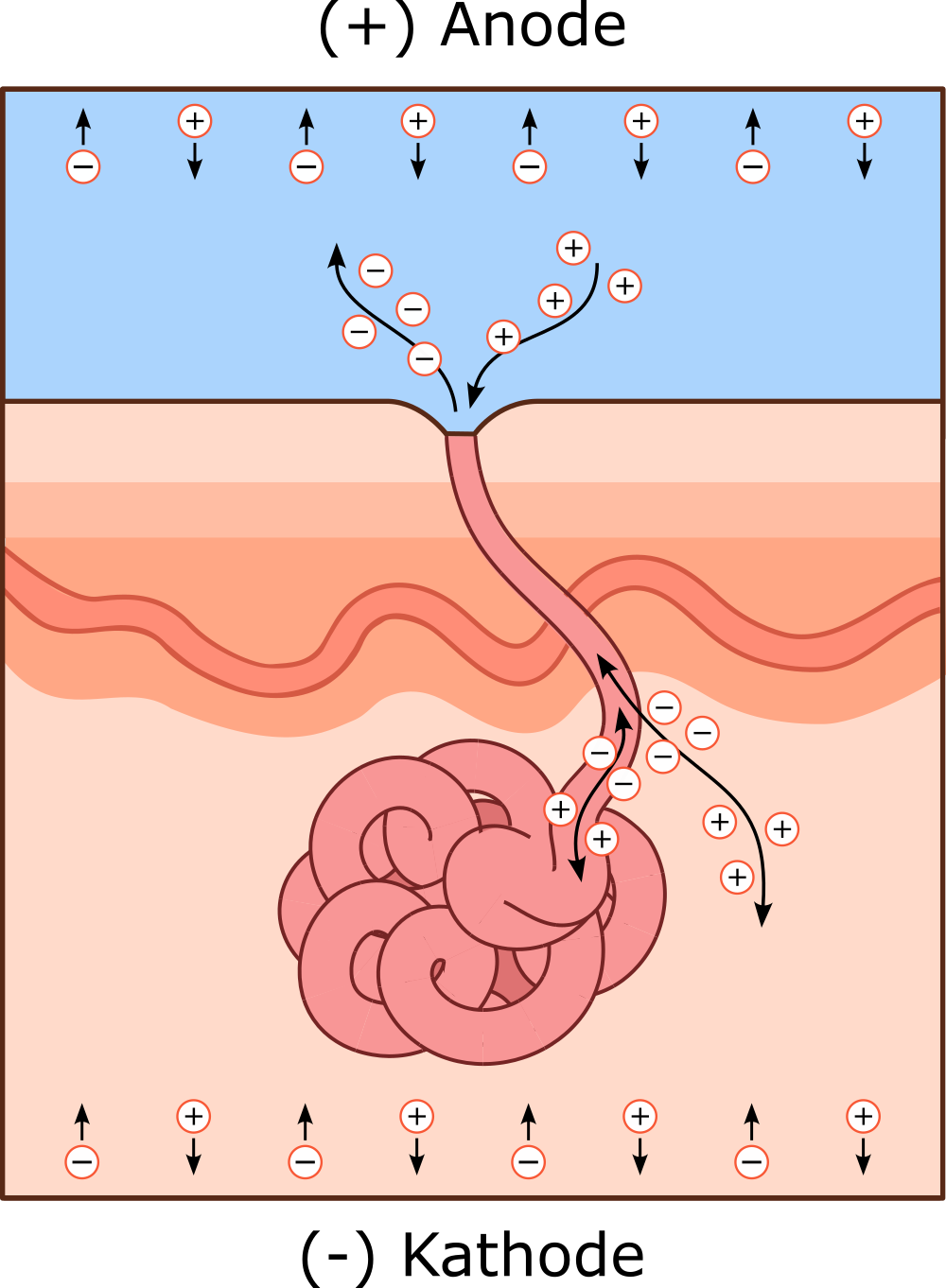
During iontophoresis treatment, the ions dissolved in the water migrate, in particular through the sweat ducts, to the sweat glands and into deeper layers of the skin – precisely those ducts through which sweat is also transported to the surface via ion transport.
The effects of tap water iontophoresis are delayed and require repeated applications. The sweat ducts and glands are not morphologically altered in the process. Furthermore, the sweat-reducing effect is reversible; that is, once treatment is stopped, sweating resumes after some time and returns to its initial level.
The effect also depends to some extent on the direction of the direct current. This is slightly higher at the positive electrode (anode) than at the negative electrode (cathode). Opposing ion concentrations and pH values reduce sweating equally, albeit to varying degrees.
The exact mechanism of action of tap water iontophoresis remains unclear to this day. Blockage of the sweat ducts is considered unlikely, as this would significantly impede the flow of current and ions. One explanatory approach frequently cited in the literature posits a disruption of ion transport in the secretory complex of the sweat glands. In any case, the flow of current and ions normalises excessive sweating.
Proven effectiveness
The effectiveness of tap water iontophoresis is assessed using various parameters. In the past, sweat secretion was measured using absorbent materials, with the increase in weight or colour change being evaluated. However, these methods merely provide a snapshot of the situation. Today, instead, patients themselves are asked to rate the severity of their sweating. This is assessed using the so-called HDSS score (Hyperhidrosis Severity Score). Further evidence of effectiveness is provided by the measurement of improved quality of life using the DLQI score (Dermatology Life Quality Index).
Over the past few decades, the effectiveness of tap water iontophoresis has been investigated in numerous international studies and case series. The therapy is considered to be highly effective whilst having few side effects. The success rates reported range between 80 and 100%. Tap water iontophoresis has been firmly established as a recommended treatment method in medical guidelines for the treatment of hyperhidrosis for over 20 years.
Indications and contraindications
The most common indication for tap water iontophoresis is the treatment of focal hyperhidrosis. Other areas of application include the treatment of dyshidrotic eczema of the hands and feet, as well as treatment-resistant warts. Finally, tap water iontophoresis is also used for local pain relief.
Tap water iontophoresis must not be used in the following cases:
- Pacemakers or defibrillators
- Metal implants and other conductive objects lying in the direct current path between the electrodes
- Cardiac arrhythmias
- Neurological disorders
- Conditions or defects in the treatment area, such as inflammation, thrombosis, circulatory disorders or skin defects
- Age restrictions (depending on the device manufacturer)
Risks and side effects
- Dry skin and itching following treatment
- Tingling and burning sensations in the treated areas
- Reversible redness and blisters
- Mild electric fence effect
- Localised electrical burns
Comparison with other hyperhidrosis treatments
Tap water iontophoresis
- Effectiveness
High and proven effectiveness - Risks and side effects
Generally few and mild side effects - Areas of the body that can be treated
Suitable for numerous areas of the body - Type of treatment
Conservative – without permanent alteration of the sweat glands or the nervous system - Invasiveness
Non-invasive - Active ingredients and medication
None - Suitability for children and adolescents
Yes - Effort and costs
One-off purchase, regular use
Other treatment methods
- Effectiveness
Limited effectiveness, particularly with antiperspirants - Risks and side effects
Severe skin irritation, possible systemic side effects, compensatory sweating and scarring - Treatable areas of the body
Usually limited to the underarms or a few areas of the body. Exception: antiperspirants - Type of treatment
Partially irreversible, e.g. in the case of sweat gland removal or sympathectomy - Invasiveness
Invasive in the case of botulinum toxin, sweat gland removal and sympathectomy - Active ingredients and medications
Aluminium chloride, anticholinergics, botulinum toxin - Suitability for children and adolescents
With the exception of antiperspirants, only suitable to a limited extent or not suitable - Effort and costs
Either ongoing costs with repeated use or high costs for one-off procedures